Amir Eskandari
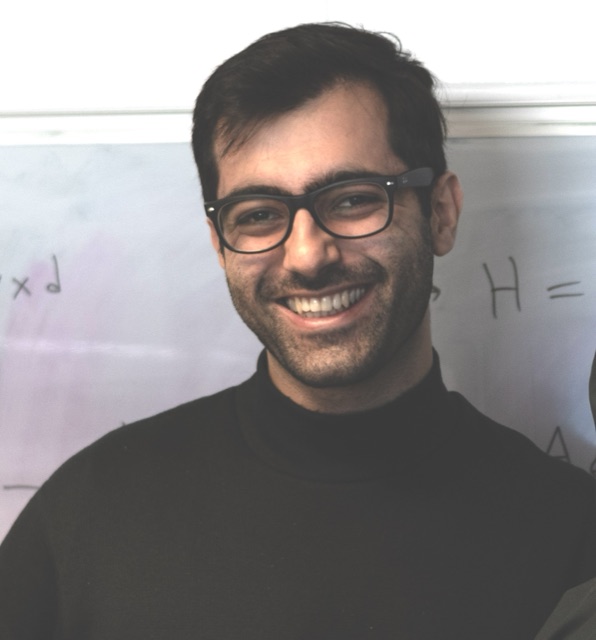
I am a PhD candidate in the School of Computing at Queen’s University in Ontario, Canada, working on the personalization of large language models. I am supervised by Dr. Farhana Zulkernine and Dr. Jordan Poppenk. I am also a PhD trainee at Connected Minds CFREF.
Prior to my PhD, I was a graduate research assistant at AUT. I proudly hold an M.Sc. degree from Amirkabir University of Technology and a B.Sc. degree from IKIU, both in Electrical Engineering. During my master’s, I worked on multivariate time-series imputation using GNNs, supervised by Dr. Vahid Pourahmadi.
I love talking about science and technology. Shoot me an email if you’d like to discuss! You can also find me on Google Scholar, GitHub, LinkedIn and X.
I. News
| Date | Event |
|---|---|
| Aug 2026 | I attended the RBC Borealis AI summer school, and our team won the challenge! |
| Jul 2026 | Our paper ElderBench, a benchmark of personalized open-source LLMs for older adults, was published at IEEE COMPSAC 2026 in Madrid. |
| Jul 2026 | Our system CASPAR for the MedExACT shared task on medical decision extraction was published at the BioNLP 2026 workshop at ACL. |
| Feb 2026 | Our paper ASMa on asymmetric spatio-temporal masking for skeleton action representation learning was published in Transactions on Machine Learning Research (TMLR). |
| Dec 2025 | My paper InfGraND, an influence-guided GNN-to-MLP knowledge distillation method, has been accepted for publication in Transactions on Machine Learning Research (TMLR). |
Show 10 earlier entriesHide earlier entries
| Sep 2025 | I started a new internship position as Machine Learning Associate at the Vector Institute! |
| Aug 2025 | Our paper CNN-CCA on anomaly detection in metro rail sensor data got published in Machine Learning with Applications (Elsevier)! |
| Jul 2025 | Our paper on self-supervised keypoint detection with distilled depth representations got accepted at ICMV 2025. |
| May 2025 | Two papers got accepted at IEEE COMPSAC 2025: SDA-GRIN for spatio-temporal time-series imputation, and a voice-adaptive LLM conversation bot. |
| Feb 2025 | I presented a poster at the Connected Minds annual retreat. |
| Aug 2024 | Submitted our survey on Transformer-based models to ACM Computing Surveys. |
| Aug 2024 | Our paper on GN2DI, a scalable GNN for spatial missing-data imputation in sensor networks, was accepted to IEEE FMLDS 2024. |
| May 2024 | I won the prestigious Connected Minds PhD Award! |
| Sep 2023 | I started my PhD in the School of Computing, Queen’s University! |
| Mar 2023 | I defended my master’s thesis on GNNs for multivariate time series with an excellent grade! |
II. Research
My goal is one model that gives each person the answer that suits them. I am exploring different approaches to personalization, including retrieval, post-training (RL and SFT) and test-time scaling (Fig. 1). Personalization also comes with practical constraints, such as efficiency and local deployment on the user’s own device; I keep these in view and work toward methods that respect them. My research broadly spans graph machine learning and LLM post-training.
Definition 1 (Personalization). Given a query x and what we know about a user u, a personalized model aims for the answer that this user prefers,
yu* = arg maxy ru(x, y),(1)
where ru is the user’s own reward, rather than one answer for everyone.
III. Selected Publications
- A. Eskandari, A. Anand, E. Rashno, and F. Zulkernine, “InfGraND: An Influence-Guided GNN-to-MLP Knowledge Distillation,” Transactions on Machine Learning Research (TMLR), 2026. [pdf] [project] [code] [blog]
- A. Eskandari, J. Tao, F. Zulkernine, M. Morningstar, J. Poppenk, and B. Herrmann, “ElderBench: Benchmarking Personalized Open-Source LLMs for Older Adults,” IEEE 50th Annual Computers, Software, and Applications Conference (COMPSAC), 2026.
- A. Anand, A. Eskandari, E. Rashno, and F. Zulkernine, “ASMa: Asymmetric Spatio-temporal Masking for Skeleton Action Representation Learning,” Transactions on Machine Learning Research (TMLR), 2026. [pdf]
- A. Eskandari, A. Anand, D. Sharma, and F. Zulkernine, “SDA-GRIN for Adaptive Spatial-Temporal Multivariate Time Series Imputation,” IEEE 49th Annual Computers, Software, and Applications Conference (COMPSAC), 2025. [pdf] [project] [code]
- E. Rashno, A. Eskandari, A. Anand, and F. Zulkernine, “Survey: Transformer-based Models in Multimodal Data Processing,” ACM Computing Surveys (under review), 2024. [preprint]
All papers are listed on the publications page.